
Technology
Prestressed concrete and construction chemistry address different parts of the same challenge: how a structure carries loads, how it is built and how it performs in service.
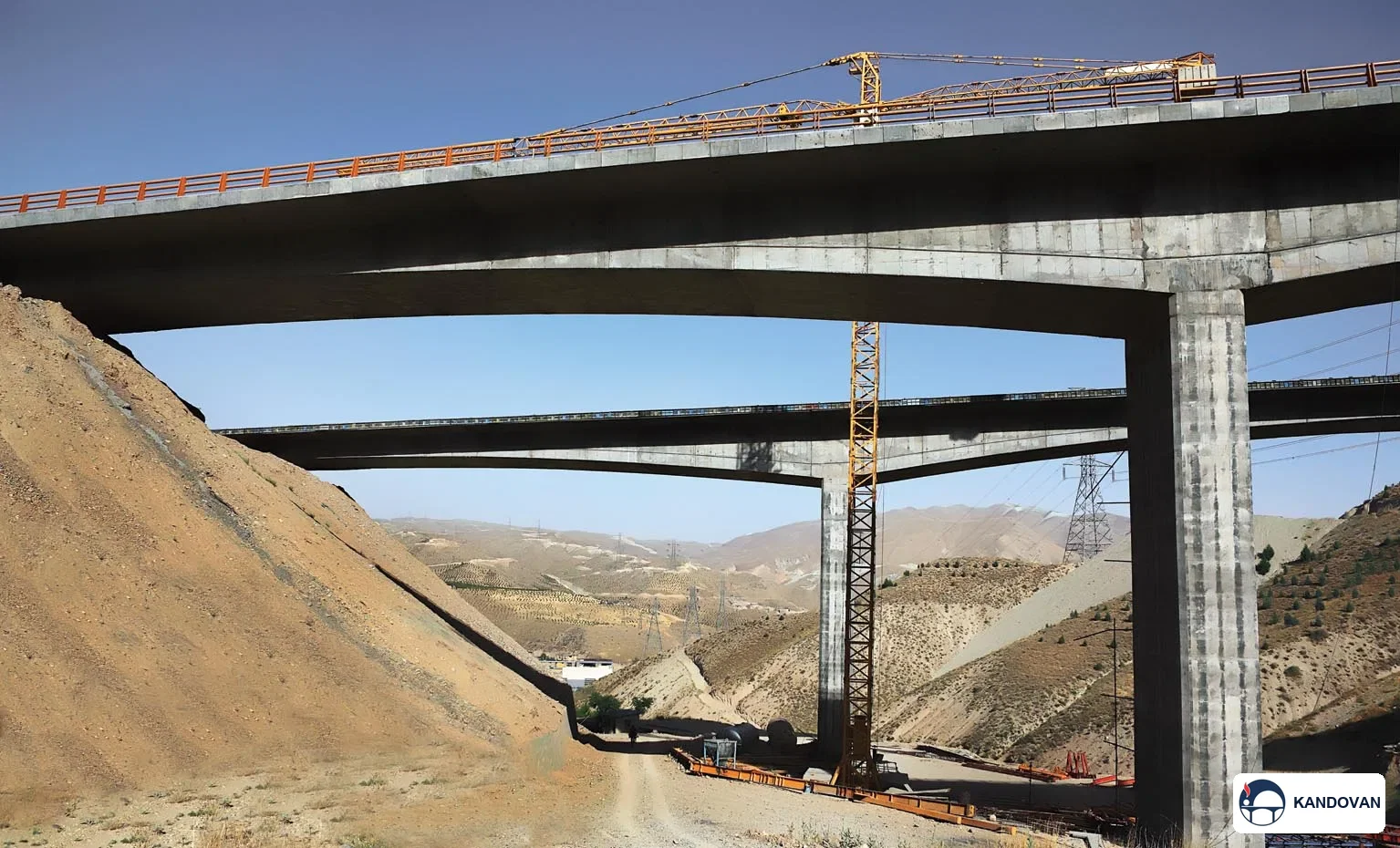
Prestressed concrete
Prestressing introduces compression into concrete to offset tensile stresses from loading. Depending on the design, it can help control cracking and deflection and make longer spans possible.
Pre-tensioning
Steel strands are tensioned before the concrete is cast. Once the concrete reaches the required strength, the strands are released and transfer the prestressing force to the member.
Post-tensioning
Tendons are stressed after the concrete reaches the specified strength. End anchorages transfer the force to the concrete. In bonded systems, grout fills the ducts around the tendons.
Project examples
Our project portfolio documents post-tensioned flat slabs and slab-and-beam systems for buildings, box and I-girders for bridges, and experience with prestressing applications for foundations, tanks, silos and shells.
Construction chemistry
Admixtures and protective materials help meet the requirements of placing, curing, protecting and repairing concrete. Selection depends on the concrete mix, the condition of the substrate and the intended exposure.
Concrete admixtures
Water reducers and superplasticizers can improve workability or reduce water demand. Set-controlling admixtures can adjust working time and early strength development.
Grouts and repair materials
Tendon grout in bonded post-tensioning fills the duct and helps protect the steel. Structural repair mortars, injection resins and non-shrink bearing grouts address different conditions and should be specified for their intended application.
Waterproofing and surface protection
Membranes, coatings and sealers can limit water ingress or protect surfaces from specific exposures. Material selection also depends on cracks, joints, substrate moisture and compatibility with adjacent materials.